
Medical Virtual Assistant

Remote Patient Monitoring Support Staff for Healthcare Providers

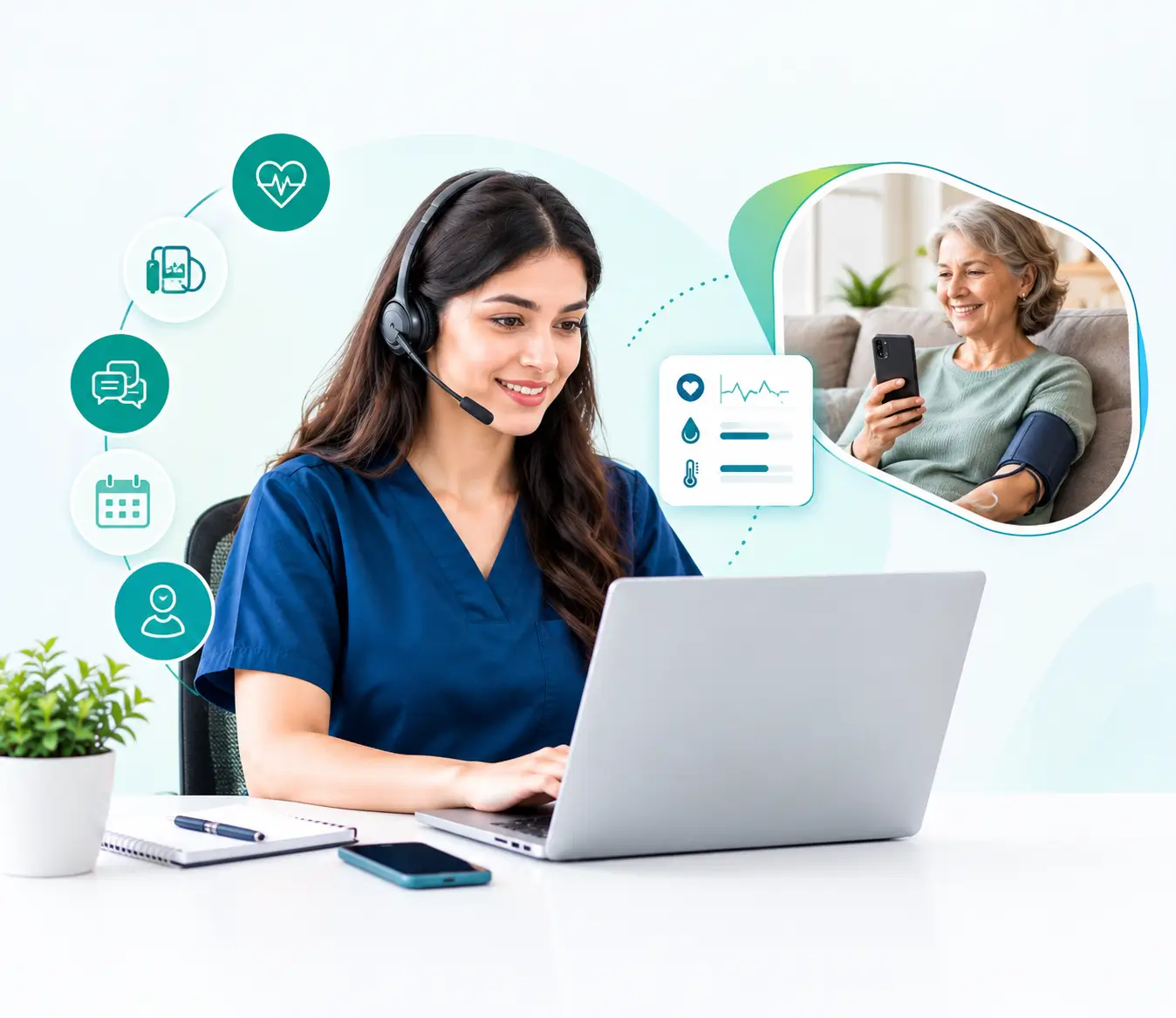
RPM staffing from Medical Virtual Assistant LLC (MVA) means dedicated non-clinical team members who handle patient enrollment, device logistics, adherence outreach, scheduling, and documentation prep for your remote patient monitoring program. Your licensed clinicians keep every monitoring, review, and management decision.

Remote Patient Monitoring Support Staff MVA img
MVA Concerned Nurse with Missed Call Alerts

Missed Call, Missed Care. Let's Stop That!

Buying connected RPM devices and subscribing to an RPM platform are the easiest parts of being an RPM service provider. The real struggle is to maintain a functioning program. Patients may never activate devices, stop taking readings, ignore reminders, or contact the office because they don’t understand what their device is doing. On top of it all, the provider has to take care of the daily patient flow and other office operations. 

Medical Virtual Assistant LLC is all set to take the hardest part off your plate, so you can focus on delivering better care and growing your practice. Our medical virtual assistants are trained on various remote patient monitoring platforms and workflows such as onboarding patients, following up on missing data, resolving routine issues, documenting outreach, and keeping daily operations moving.

Our VMAs Already Know The RPM Platforms & EHRs You Use

Our VMAs Already Know The RPM Platforms & EHRs You Use

What Can an RPM Virtual Assistant Do for Your Practice?

Patient Outreach and Follow-Up

Keeping patients engaged with remote patient monitoring takes consistent communication. Your virtual assistant can follow up with patients who haven't submitted their readings, send reminders based on your established schedule, and contact patients about incomplete tasks. They can document each outreach attempt, record patient responses, and direct questions or concerns to the appropriate team member according to your protocols.

Onbording & Session (MVA)

Patient Enrollment and Onboarding Support

Getting patients started with RPM involves several steps, and delays can leave your team chasing incomplete information. An RPM virtual assistant can coordinate enrollment calls, follow up on outstanding forms and consent steps, share approved program instructions, and track each patient's onboarding progress. When a patient needs additional assistance or a task cannot be completed, your assistant can document the issue and bring it to your team's attention.

RPM Documentation and Administrative Tasks

Your team needs accurate, up-to-date records to keep the program running smoothly. A virtual assistant can update authorized patient information in your EHR or RPM platform, document outreach and follow-ups, maintain task lists, and help prepare routine operational reports. They can also coordinate nonclinical requests with your team or technology vendor, helping prevent administrative tasks from slipping through the cracks.

Patients with chronic conditions

Monitoring Workflow Coordination

An RPM program generates ongoing tasks that need to be tracked, assigned, and followed through. Your assistant can review designated work queues, track missed-reading follow-ups, monitor unresolved support requests, and route alerts to the appropriate clinical team member according to your written protocols. They can also document handoffs and flag outstanding tasks that require attention, helping your team maintain a clearer view of day-to-day operations.

Your RPM Program Needs More Than Patient Readings

When you’re responsible for patient care and practice operations, RPM can introduce another layer of work for you and your team. Here’s what most RPM providers struggle with.

Patients stop sending readings

Someone needs to follow up and document outreach attempts.

Enrollment gets delayed

Patients may need reminders, onboarding assistance, or help completing required steps.

Routine questions keep coming in

Your team needs time to respond to patients and coordinate nonclinical support.

Documentation falls behind

Outreach, follow-ups, and unresolved tasks need to be recorded consistently.

Remote Patient Monitoring Support MVA

Your staff is already stretched

Adding RPM responsibilities can mean more work for a team that has little capacity left.

That’s where an RPM support service provider like MVA comes in.

Clinical responsibility stays with your clinical team.

Virtual assistants can support the administrative workflows surrounding RPM, but they should not independently interpret patient readings, assess symptoms, diagnose conditions, or recommend treatment.

Task MVA team (non-clinical) Your clinicians and practice
Finding eligible patients
Prepares chart lists and checks insurance eligibility
Decides who is appropriate and orders RPM
Initiating visit
Schedules it, sends reminders, prepares the visit checklist
Conducts the visit, discusses monitoring, documents consent
Consent paperwork
Sends forms and tracks completion
Confirms consent in the record
Device ordering and shipping
Orders, ships and tracks devices; arranges returns
Prescribes the device
Device setup help
Walks patients through pairing, connectivity and app questions
Answers any clinical question about readings
Missed-reading outreach
Contacts patients whose readings stopped and helps restore transmission
Follows up on out-of-range readings
Follow-up scheduling
Books patient calls and visits
Conducts the interactions
Documentation prep
Keeps device inventory, shipment and outreach-attempt logs
Records clinical review and management time
Billing prep
Prepares monthly data-transmission-day summaries from your RPM platform
Reviews them and bills
MVA Bilingual Healthcare Support Connection

Bilingual Patient Communication

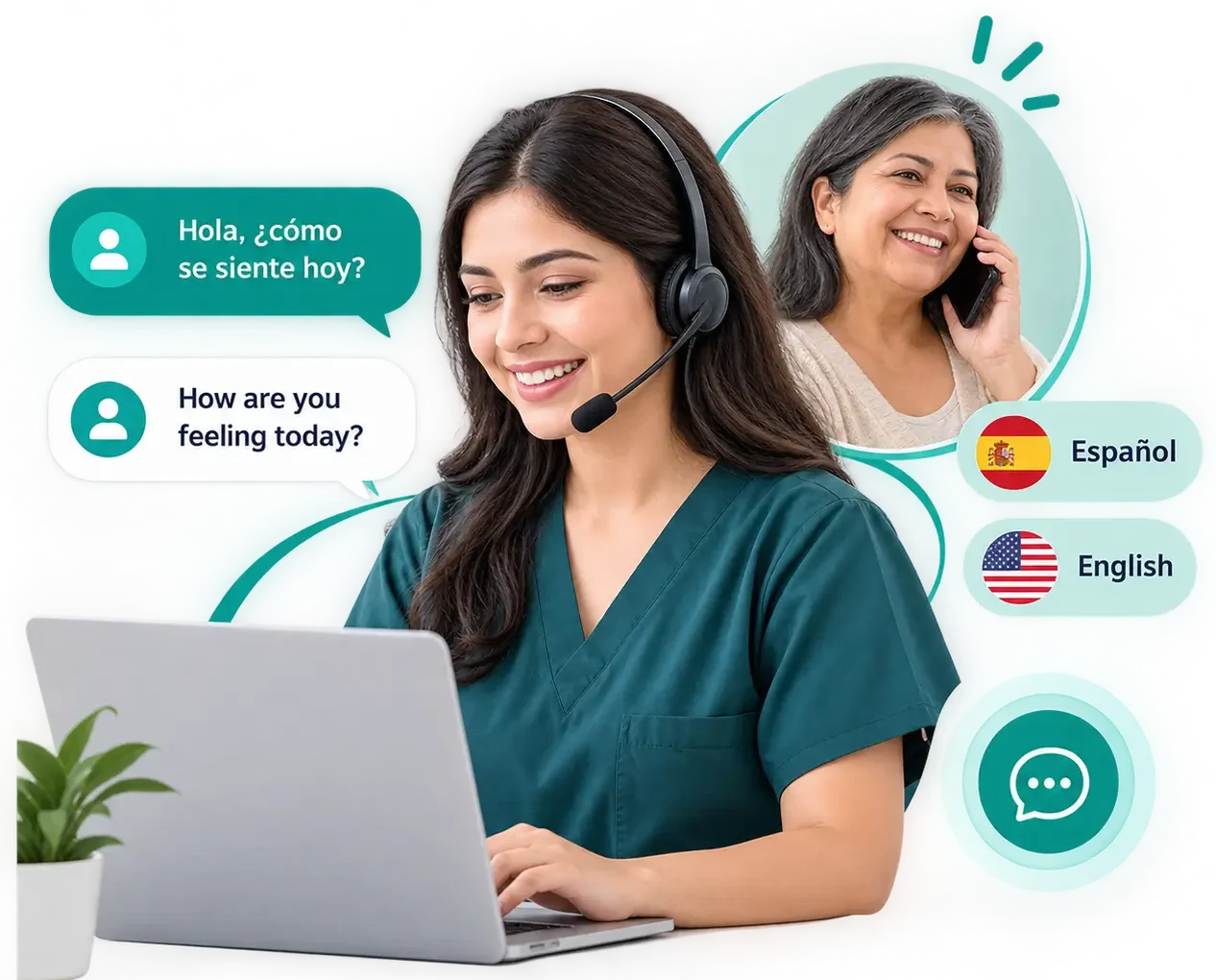
If your practice serves Spanish-speaking patients, communication can become another hurdle in keeping them engaged with your program. MVA offers English–Spanish bilingual virtual assistants who can support appropriate patient-facing and administrative workflows in both languages.

Depending on the role, they may help with:

Why RPM Service Providers Choose MVA for Support?

Healthcare background

We recruit assistants with healthcare-related experience and provide training in areas such as medical terminology, patient communication, privacy protocols, and healthcare workflows.

English–Spanish language options

You can choose bilingual support when your patient population and communication needs call for it.

A dedicated assistant

Build a role around the work your practice needs to delegate, rather than trying to fit your workflow into a generic service package.

Specialty-aware matching

We consider your requirements, communication preferences, and workflow when matching candidates to your practice.

A standby assistant at no extra cost

MVA provides a secondary assistant who can become familiar with your systems and workflows, helping maintain continuity when your primary assistant is unavailable.

Flexible coverage

Discuss the schedule that makes sense for your practice, including regular business hours and other coverage needs, subject to role and staffing availability.

Remote Patient Monitoring Support img

Support That Fits the RPM Program You Already Have

You don’t need to replace your existing RPM platform to explore staffing support.

MVA’s role is to provide people who can work within your approved systems and processes. During the initial discussion, we’ll identify the tasks you want to delegate, the software involved, and the level of access required. That means your assistant’s role can be shaped around your practice instead of forcing you into a one-size-fits-all package.

Remote Patient Monitoring Support img

Who Can Benefit From RPM Staffing Support?

MVA’s RPM support is designed for healthcare providers and practices that run remote patient monitoring programs and need help managing the associated workload.

This may include:
Remote Patient Monitoring Support Staff

Getting Remote Patient Monitoring Support is Now Easier Than Ever!

Remote Patient Monitoring MVA (1)

Tell us how your RPM program works.

We'll discuss your patient population, day-to-day workload, software, communication needs, and the tasks taking up your team's time.

Find the right candidate.

We'll look for a candidate whose healthcare experience, language skills, and communication style fit the role you're hiring for.

Define the workflow and responsibilities.

Before work begins, establish approved tasks, documentation standards, system permissions, escalation procedures, and reporting expectations.

Onboard your assistant.

Your assistant learns your specific processes and systems, with access granted according to your organization's security requirements.

Review and refine.

As your assistant becomes familiar with the workflow, review performance, outstanding tasks, and any changes needed to support your team.

Let's Build the Right Staffing Model for Your RPM Program

Your monitoring platform is only one part of the operation. The people handling onboarding, follow-ups, documentation, and coordination help keep the work behind it moving.

Tell us where your operations team needs support. We’ll discuss the roles, workload, and staffing arrangement that make sense for your program.

Call to Action (MVA)

Frequently Asked Questions

Can a virtual assistant support my existing RPM program?

Potentially, yes. We’ll review your current workflow, software, and task requirements to determine whether we can match an assistant to the role. Platform compatibility and permissions need to be confirmed before work begins.

Will the assistant monitor patient readings?

An assistant may support assigned monitoring workflows, such as tracking administrative queues and routing alerts according to your written procedures. Clinical interpretation and decisions must remain with appropriately authorized clinical personnel.

Can an RPM assistant follow up with patients who haven't submitted readings?

Yes, where the task is part of the agreed role. The assistant can contact patients using your approved scripts, record outreach attempts, and escalate unresolved issues according to your workflow.

Can you provide an English–Spanish bilingual assistant?

Yes. MVA offers bilingual virtual assistants who can support appropriate patient communication and administrative tasks in English and Spanish. We’ll discuss the language proficiency and experience needed for your particular role.

Do your assistants have healthcare experience?

We recruit healthcare-focused assistants and provide healthcare-related training. Candidate experience varies, so we’ll discuss the qualifications relevant to your RPM workflow when matching a candidate.

Will the assistant work from my practice or remotely?

MVA’s assistants work remotely from our onsite facility. However, the bilingual staff works from their home setting, but our hiring team ensures they have a proper workstation and a quiet, private space.

Do you sign a BAA?

Yes. MVA states that it signs a Business Associate Agreement at the organizational level before work begins. Your organization should review the agreement and determine whether the overall arrangement meets its compliance requirements.

Can an assistant work in my EHR or RPM software?

That depends on the platform, the tasks involved, and the access your organization authorizes. We’ll discuss your systems and confirm the proposed workflow before assigning the role.

Can you help if my assistant is unavailable?

MVA offers a standby assistant at no extra cost. The backup assistant’s familiarity with your workflow and the coverage arrangements should be established during onboarding.